5 Ways to Reduce Tip Disputes Among Restaurant Staff
Restaurant tip disputes are easier to investigate with written rules, worked examples and a clear correction process.
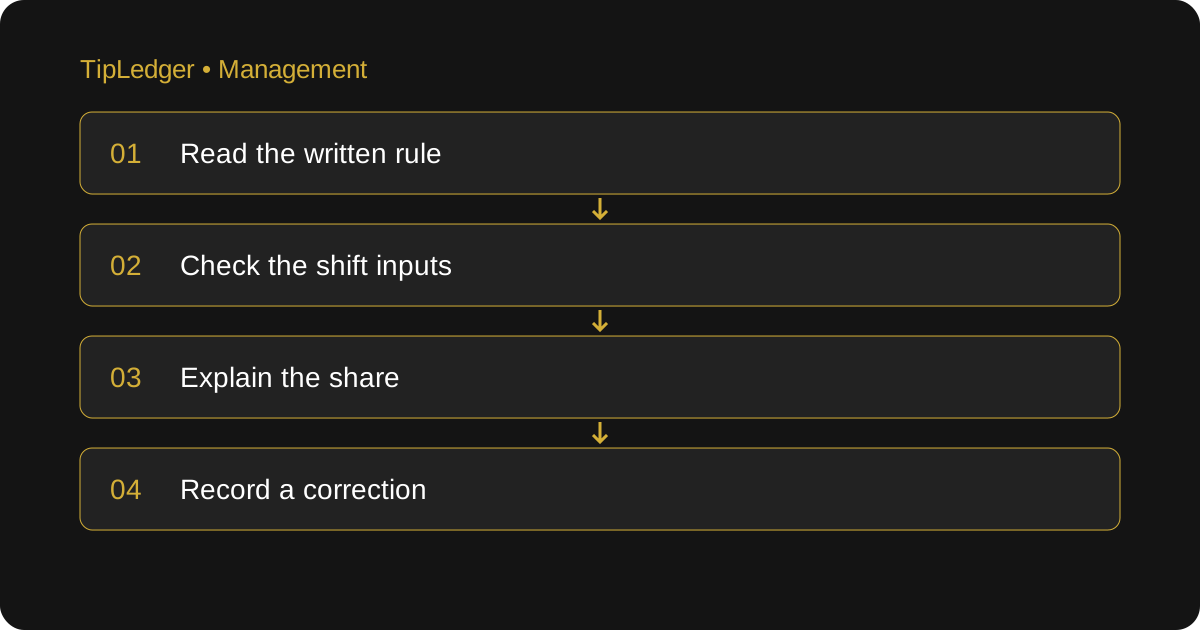
Start with the question behind the complaint
Reducing restaurant tip disputes starts with a written tip-out policy and a shift record that explains each employee’s share. A server says, “My tips look short.” A busser says, “I worked the whole shift, so why is my share lower?” Those questions need a record, not a reassurance that the spreadsheet is right. The aim is to make the policy, inputs and calculation easy to check. Clear records will not prevent every disagreement, but they let the manager separate a missing number from a disagreement about the rule itself.
Use the five steps below before changing how you split tips. Keep a copy of the policy and a reviewed shift breakdown together. When someone raises a concern, you should be able to find the shift date, the employee’s role, the hours used and the source total without rebuilding the week from memory.
1. Write the rule before the shift
A usable tip-out policy names the pool, the contribution basis, eligible roles, the distribution method and the effective date. “Support gets ten percent” leaves several questions open: ten percent of sales or tips, before or after any permitted adjustment, and divided by equal shares, hours or points? Write each answer separately. Have the policy reviewed for the rules that apply to your restaurant before using it.
Keep AM, lunch, PM and banquet rules separate if they genuinely differ. If a runner works only the dinner rush, explain how partial hours affect that role’s share. Tell employees where to find the policy and who answers questions. A manager should not announce a new percentage after seeing how much the shift collected. Date a change and explain which future shifts it covers.
2. Show a complete worked example
Here is an illustrative hours-based pool, not a recommended legal policy or a TipLedger customer result. Assume the restaurant has already confirmed who is eligible. The pool contains $120. One eligible employee has six pool hours, another has four and a third has two. The total is twelve hours, so the rate is $10 per pool hour. Their shares are $60, $40 and $20, and the three shares add back to $120.
Now suppose the four-hour employee actually worked five eligible hours. Total hours become thirteen. The exact rate becomes $120 divided by thirteen, and every share changes. The employee with six hours would receive about $55.38, the five-hour employee about $46.15, and the two-hour employee about $18.46 before the restaurant resolves the one-cent rounding remainder under its documented method. Correcting one input affects the whole pool; explain that instead of silently editing one payout.
A useful employee breakdown shows the source tips, any contribution, the pool basis and the final share. Keep cash already received separate from amounts still payable through payroll. Two records can both show tips without representing two payments. Avoid exposing another employee’s private payroll information when answering a question about the pool.
3. Check the inputs consistently
Before approving a shift, compare the tip total with the corresponding POS report. Check the business date, not just the time the report was downloaded. A close after midnight may still belong to the previous business day. Confirm that the same shift has not been entered twice and that everyone has the correct role and eligible hours.
Use the same checks for a new hire and an experienced server. A lower payout might come from fewer hours, a role change, a smaller source pool or an incorrect entry. Do not assume the person is mistaken because last week’s totals were correct. For a double shift, check whether the employee belongs in two separate pools. Combining lunch and dinner can change everyone’s share even when the day’s total stays the same.
4. Record corrections and close the loop
Create a simple review path: the employee identifies a shift and the amount questioned; a manager checks the source record; an authorized reviewer approves any correction; the employee receives an explanation. Preserve the original report and the corrected result. Note who made the change, when it happened and why. If the change affects several employees, review all affected shares rather than only the person who complained.
TipLedger’s audit trail records key changes with the person and time and is visible to owners and admins. It is an activity log, not an independent audit. Its employee view is read-only and shows only the employee’s own records; managers control how much breakdown is visible. Use those records alongside your source reports and policy, rather than treating software as proof that an input was correct.
5. Review recurring problems, not just the last complaint
At a regular policy review, group questions by cause: missing hours, unclear roles, rounding, duplicated shifts or a rule employees did not understand. If the same issue keeps returning, change the explanation or review process. A short written example may be more useful than another meeting about fairness. Invite questions without making an employee argue publicly about a personal payout.
Before the next payroll handoff, confirm that open questions have an owner, corrected totals reconcile and employees know when they will receive an answer. Keep unresolved items visible to the person preparing payroll. The practical goal is a repeatable process: everyone can identify the rule used, follow their own calculation and see how a correction was handled. That gives a disagreement a place to be resolved without relying on whoever happens to remember the shift.
Sources and further reading
- U.S. Department of Labor: Recordkeeping (Fact Sheet 21)
Primary guidance on the hours, pay and supporting records behind the shift review.
- IRS: Reporting Tip Income (Publication 531)
Primary guidance on daily tip records, cash and charged tips, and tip reporting.
Ready to simplify your tip distribution?
Try TipLedger free for 30 days. No credit card required.
Start Your Free Trial